
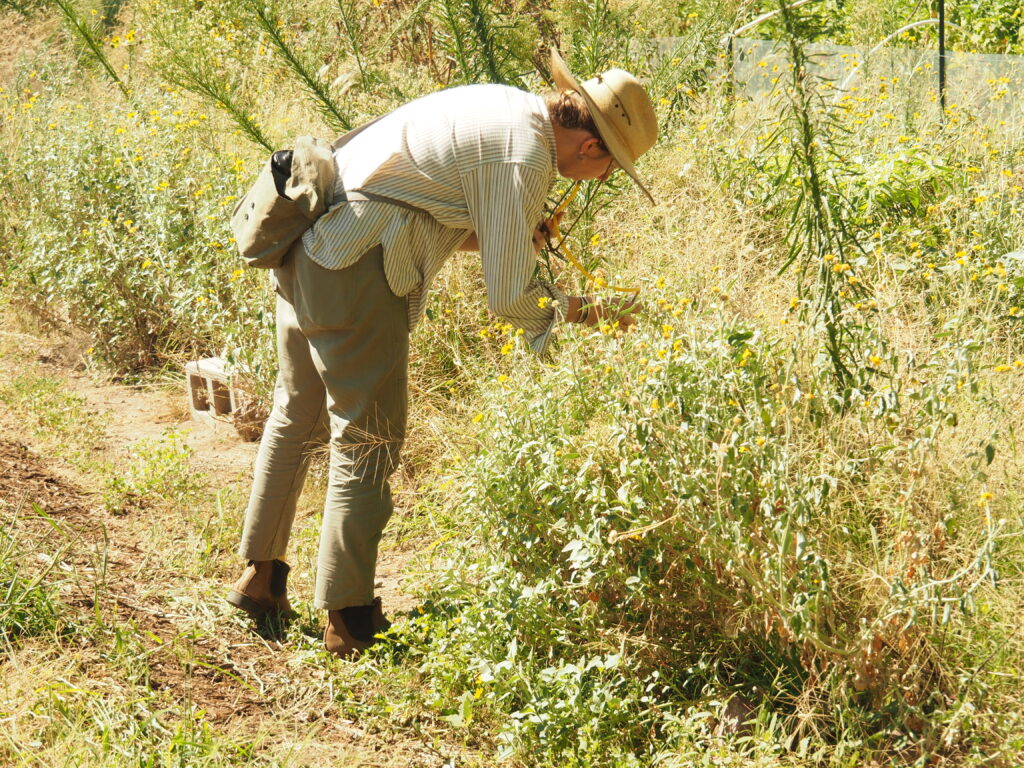
A six-acre farm on the Santa Cruz River, full of bees
Las Milpitas Community Farm is a local garden run by the Food Bank of Southern Arizona, located in the Santa Cruz River Neighborhood near the city of South Tucson.
Their mission is to disseminate agricultural education and responsible land management practices to the people that call this place home. Through this mission, Las Milpitas not only promotes continued professional education to underprivileged communities, but helps to ensure food security for those that need it most.
When the Tucson Bee Collaborative started collecting bees in 2016, our first local partner was Las Milpitas. After only a few months of sampling, it became clear that this was a special place for biodiversity, and bees were no exception.
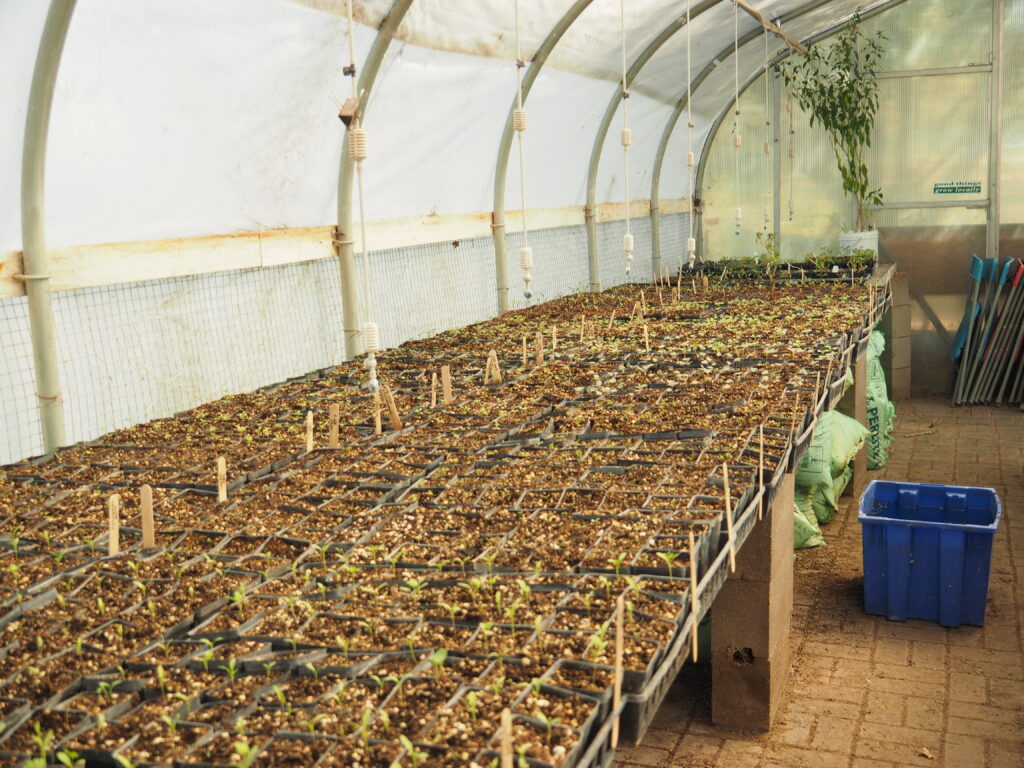
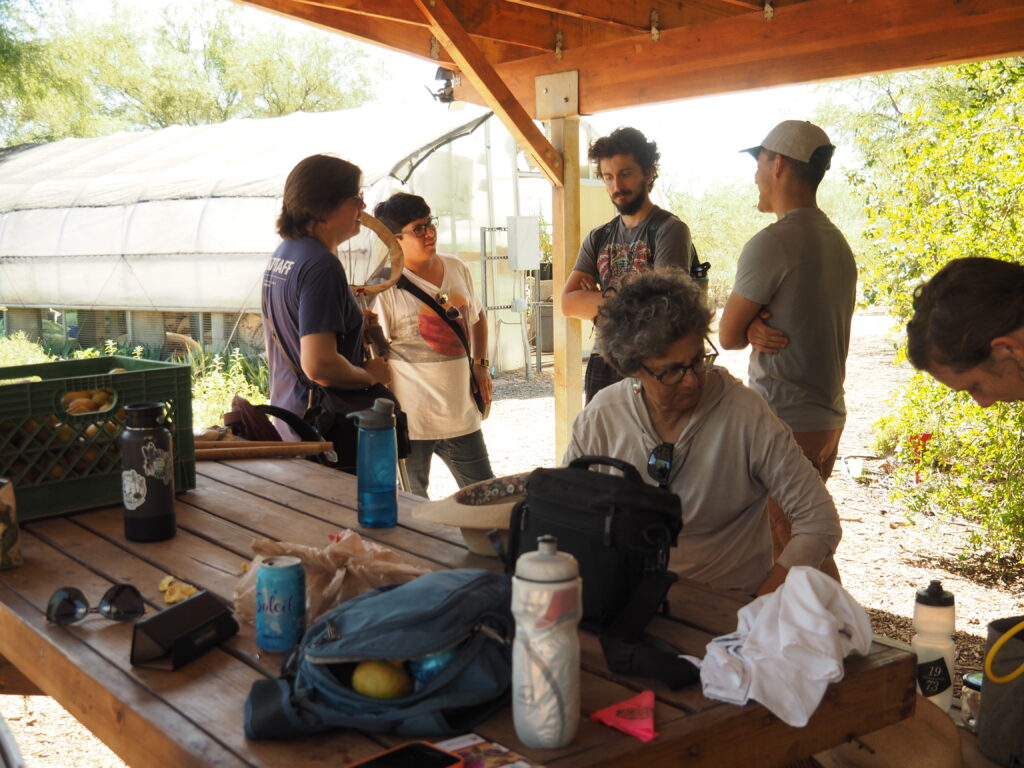
Bee sampling at Las Milpitas
Over the next six years, Arizona-Sonora Desert Museum docents and volunteers collected bees from this six-acre farm, discovering several rare species not found at any of our other sampling locations, including Perdita melanochlora, one of the smallest bees in Arizona, and Neolarra vigilans, a species of cuckoo bee that steals pollen from the nests of these fairy bees.
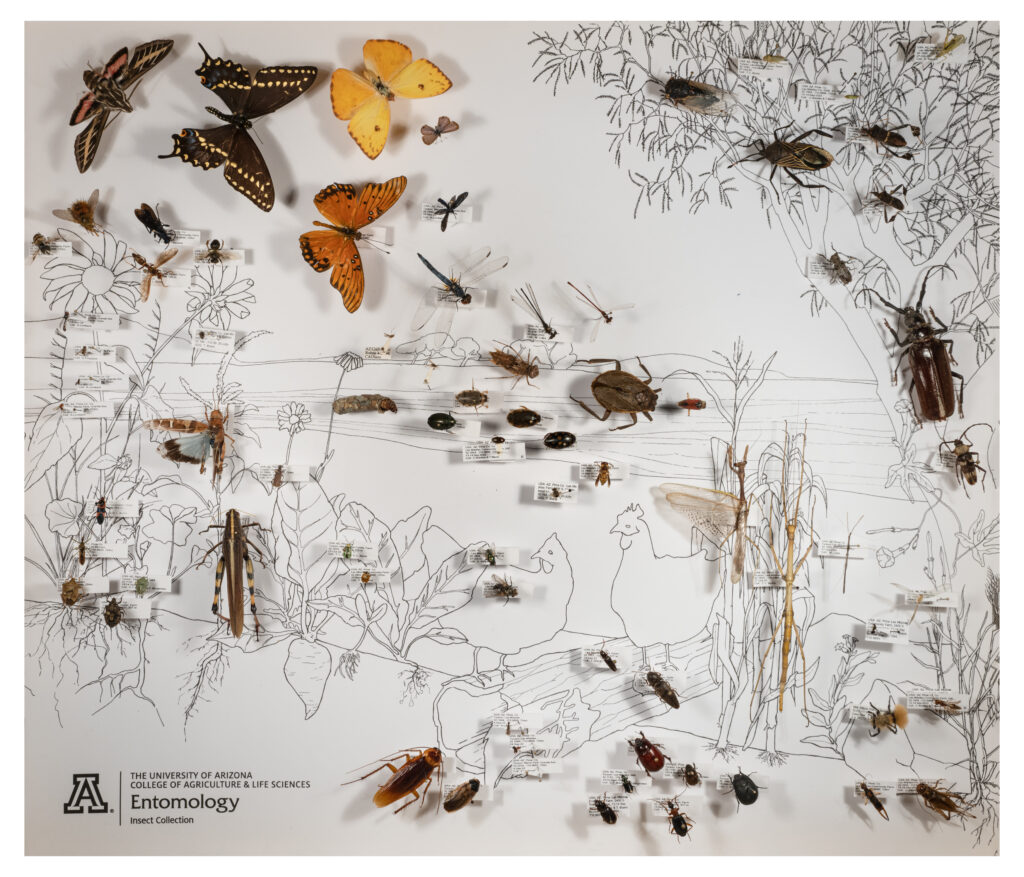
Below is a display made by University of Arizona entomology undergraduate students showcasing the diversity of insects collected from Las Milpitas.
Bringing pollinator-friendly landscaping to South Tucson
There are several factors that make Las Milpitas such a unique place to study the intersection of human landscaping and biodiversity. One is its location, being nestled right up against the banks of the Santa Cruz River, one of the oldest agricultural sites in North America. The Santa Cruz is also an essential source of water for dozens of species of plants and wildlife. Las Milpitas continues this tradition of place-based agriculture, bridging indigenous farming practices with ecologically-minded landscape design.
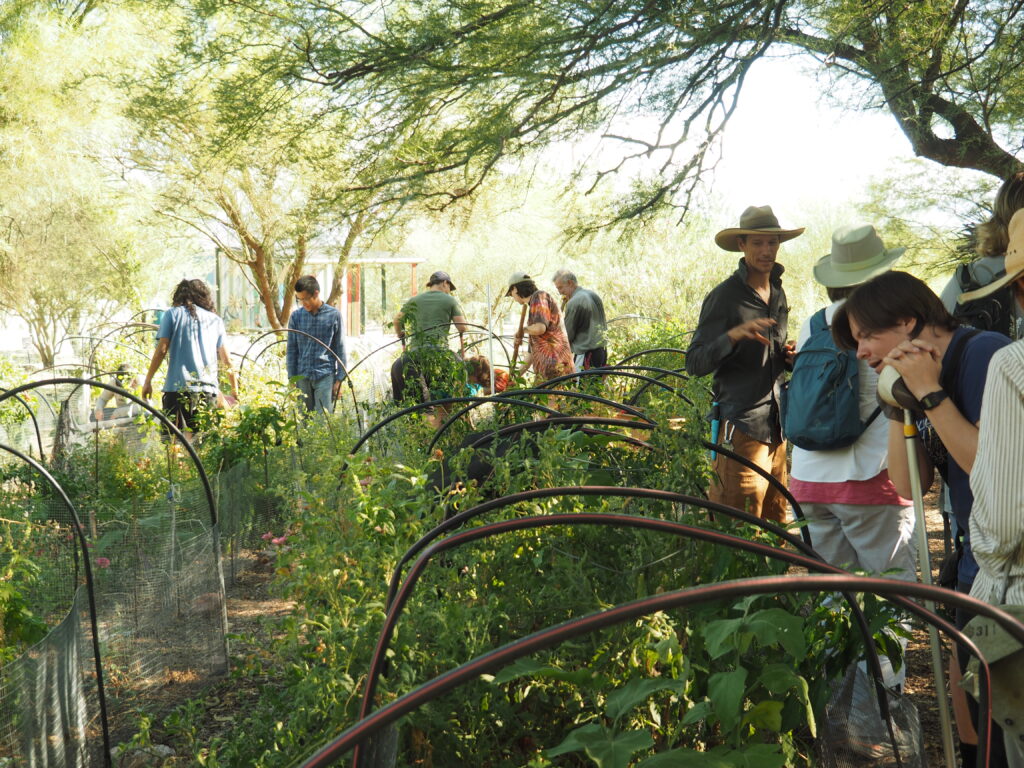
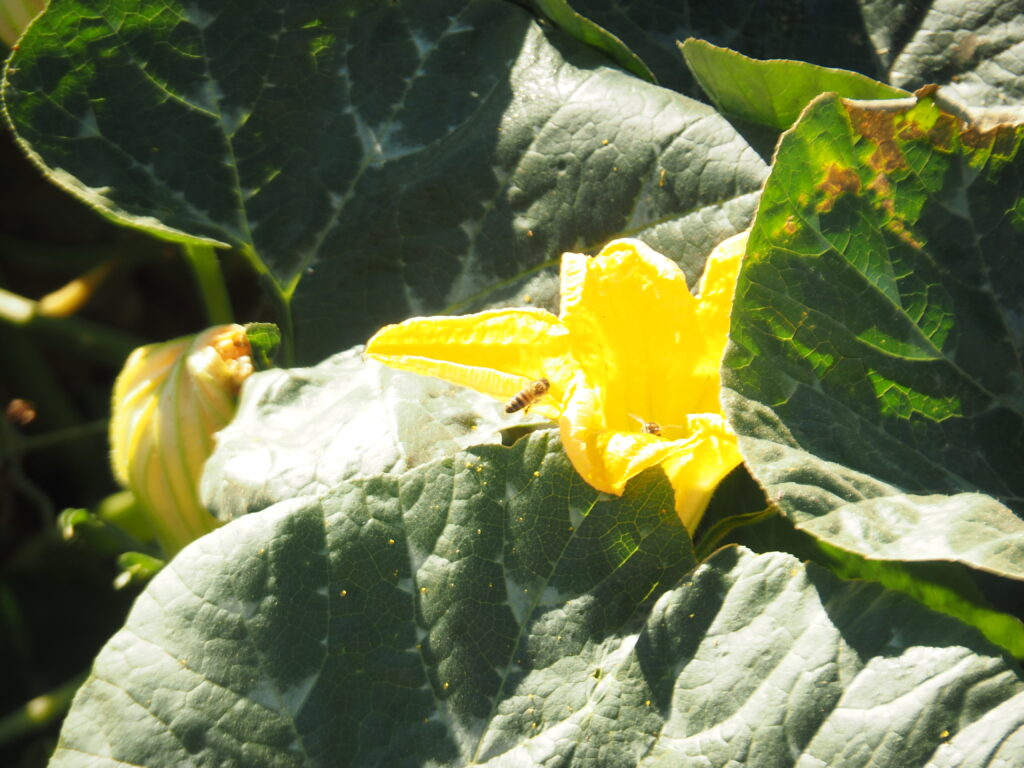
Second is its density of plant species. Although gardeners can farm whatever crops they like in their plots, the spaces between active gardens are rife with dozens of species of native plants, ranging from large velvet mesquite (Neltuma velutina) and palo verde (Parkinsonia microphylla) canopies to low-growing desert species, like globemallow (Sphaeralcea ambigua), desert marigold (Baileya multiradiata), and devil's claw (Probiscidea parviflora). Las Milpitas is also a designated migratory bird habitat by the Tucson Bird Alliance, and partners with researchers studying monarch butterfly (Danaus plexippus) conservation to incorporate host plants like milkweeds (Asclepias spp.) and coyotebush (Baccharis spp.) into their landscape design.
Through our continued collaboration with Las Milpitas, we have hosted student-led poster presentations, organized an annual pollinator celebration held each spring, and arranged several other community outreach events over the last eight years.
Visit the farm's website to learn about their gardening programs, available plots, and how their work directly influences food security for countless families in southern Tucson.